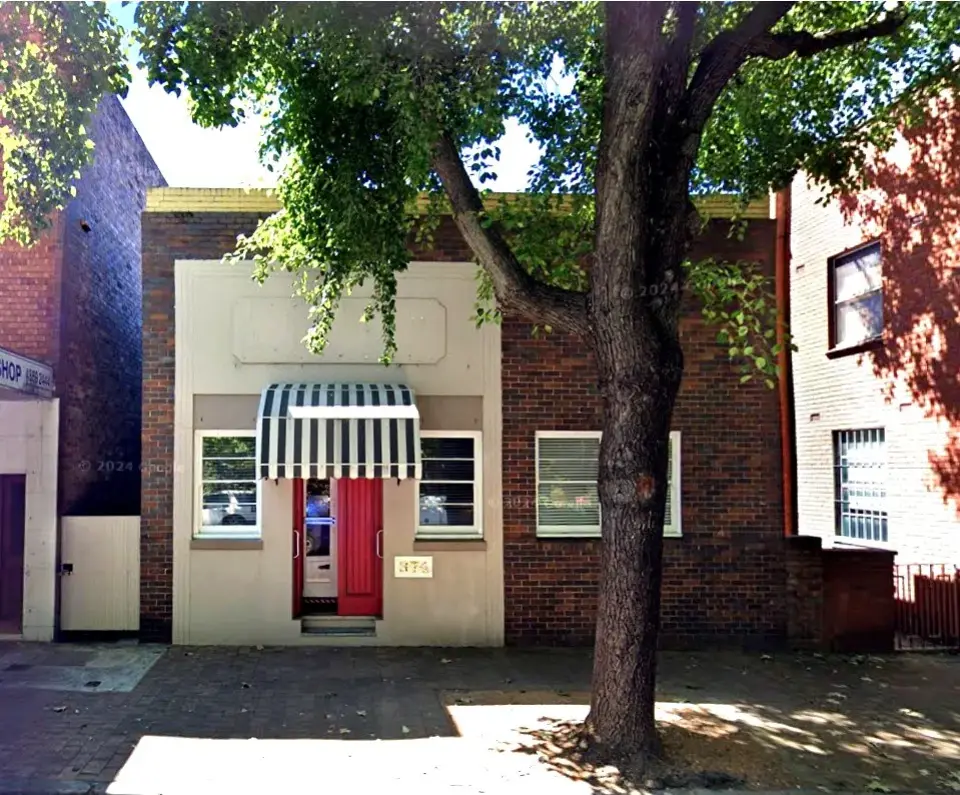
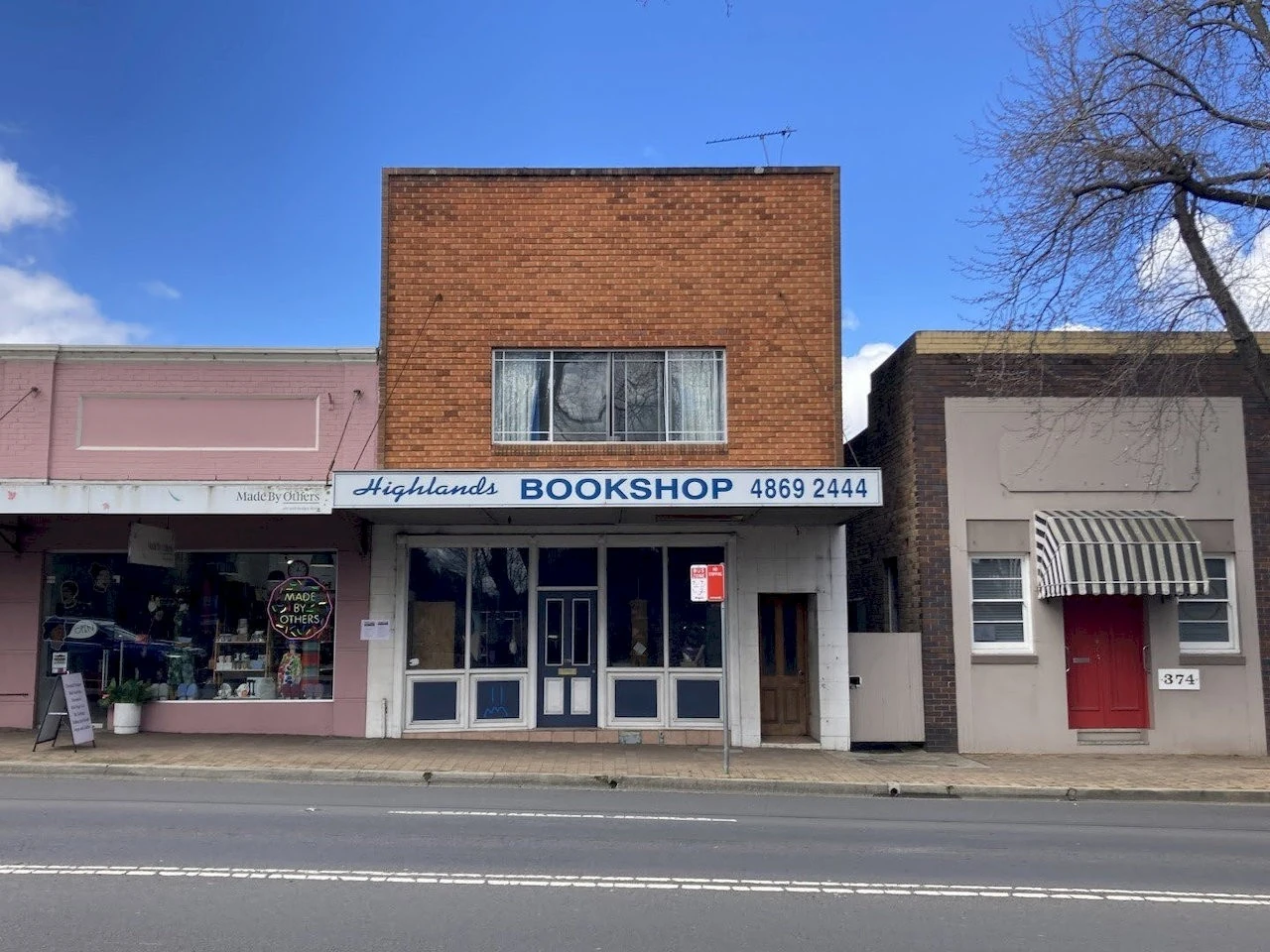
Behind the brick shopfront is a much older weatherboard house.9
The late nineteenth century is the best estimate for the original home. It has the modest scale and simple form of a Victorian or Edwardian worker's or middle-class cottage, with a high-pitched roof, verandah and straightforward timber joinery. Early directories describe private homes in this part of Argyle Street, although no original owner has yet been identified and later street renumbering may hide the house under another address.918
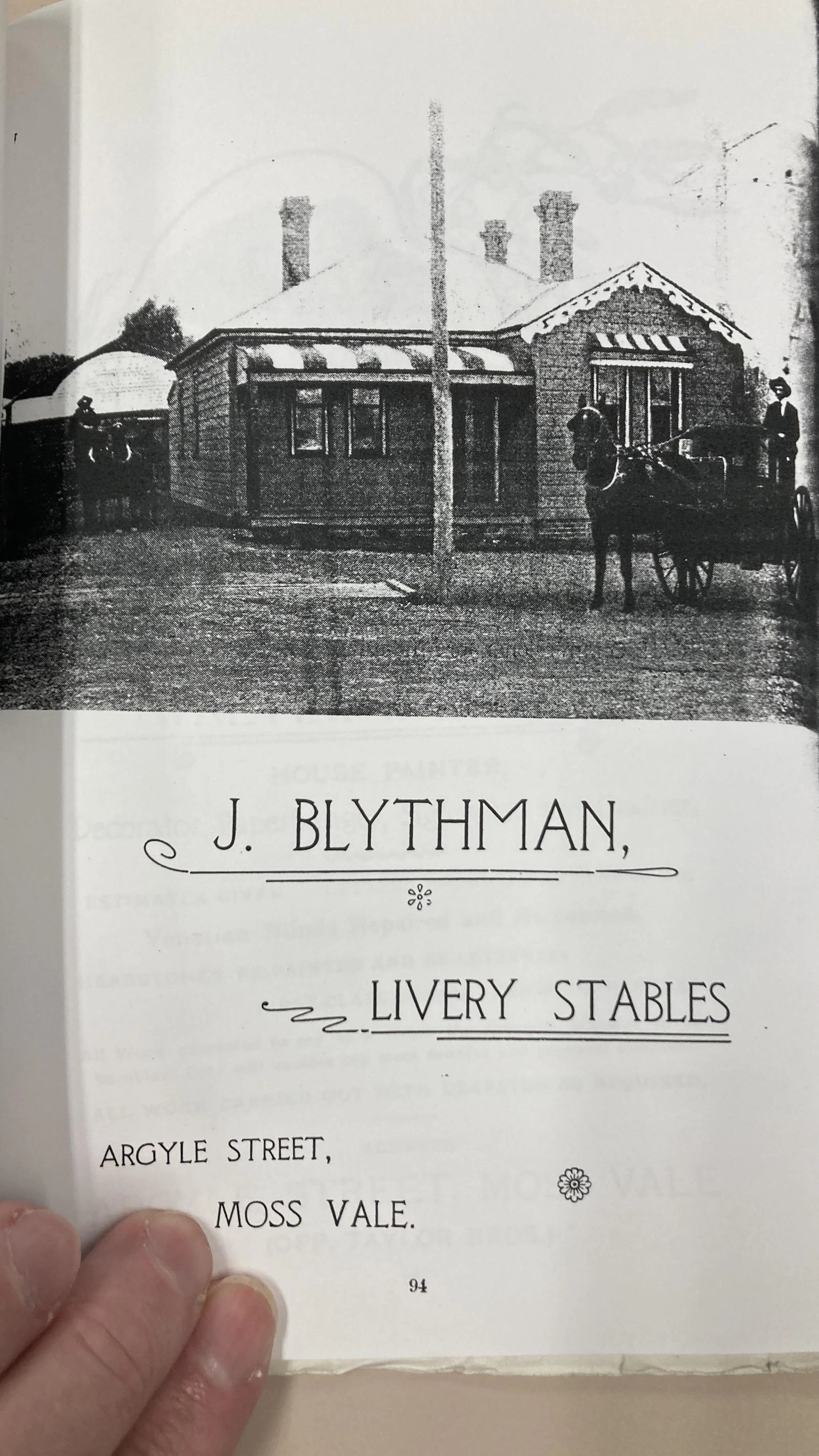
Its present form tells the story clearly: a long weatherboard residence running back towards Clarence Street, with a parapeted brick commercial frontage added later on Argyle Street. Distant photographs from around 1900 appear to show at least part of the weatherboard house before the brick front was built.9
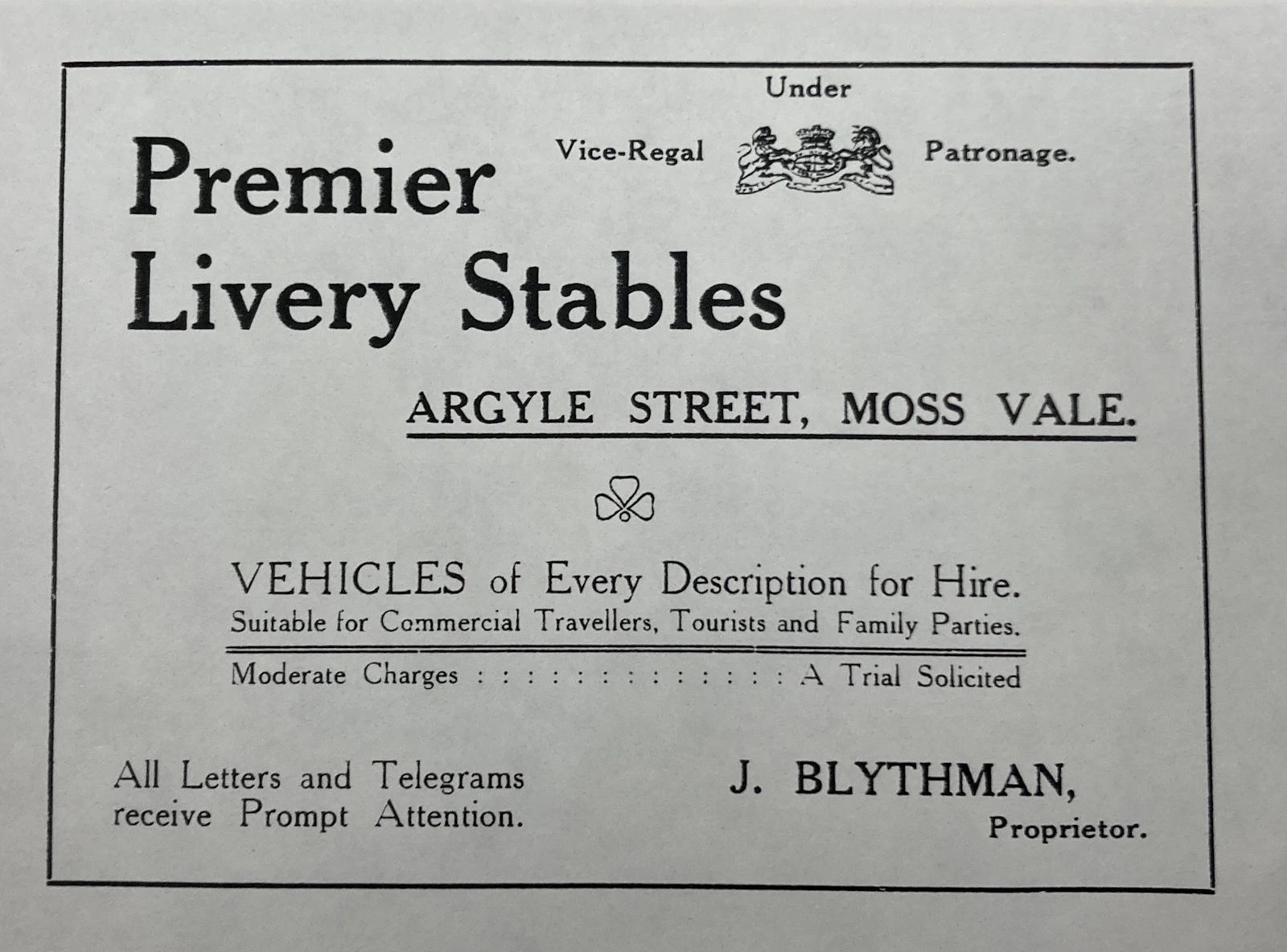
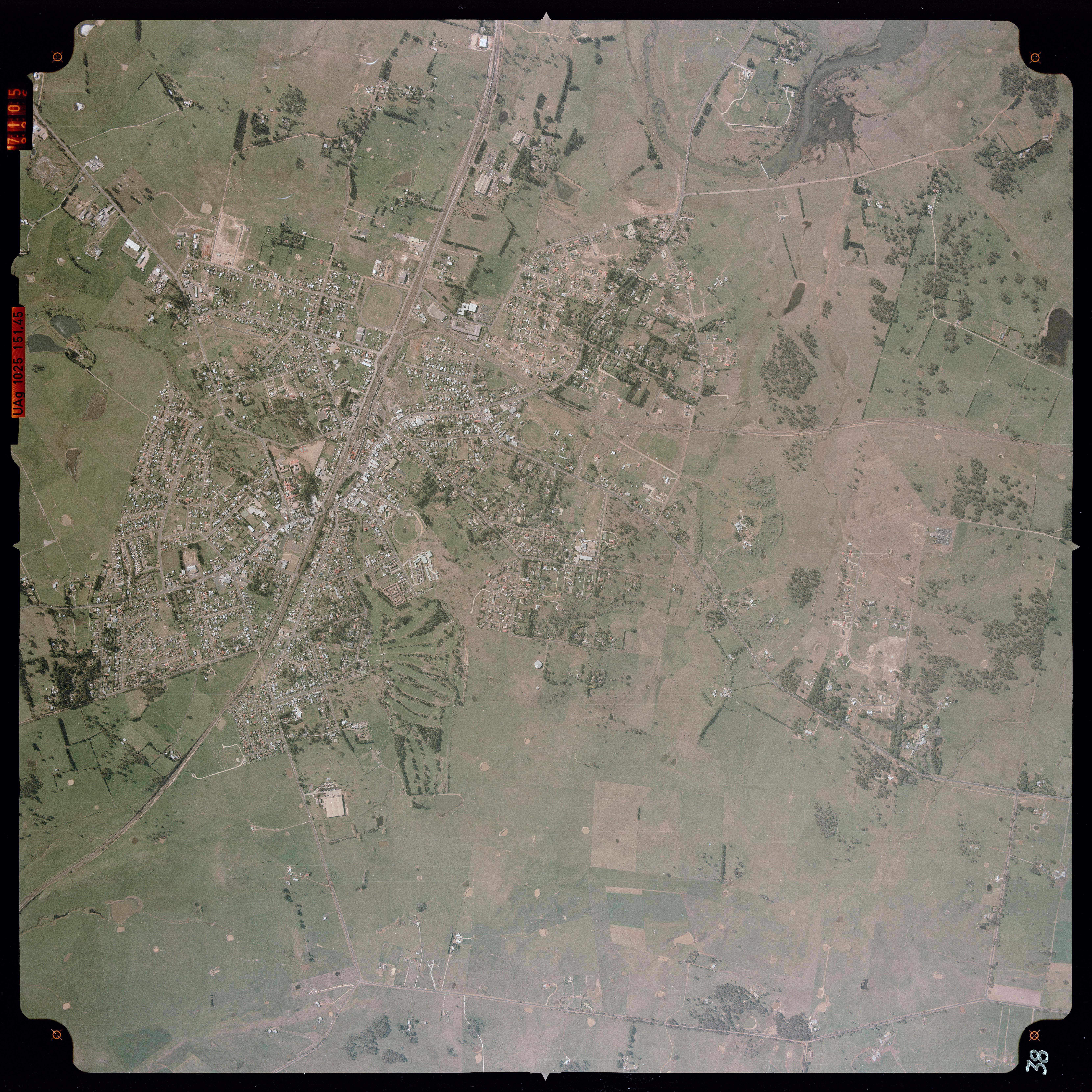
A Moss Vale town plan dated 31 May 1911 does more than place a small building marked “Wd”, meaning weatherboard, beside the former Masonic Hall and council chambers. Behind it, the plan names the large rear building as “Blythman Livery Stables”, with a paddock running along the other side. This is the first dated map found that actually names the stable in this position. It does not prove who held legal title to each parcel, but it turns the earlier location evidence into a recognisable picture of the stable precinct at and behind today's 374.53
Weatherboard itself does not date the house. The material was used in Australia from the early colonial period: a convict-built weatherboard hut stood at present-day Wentworth Falls in 1814, and an 1858 survey described numerous Sydney cottages built of weatherboard. It therefore comfortably predates 1900 and remained in use long afterwards; the estimate above rests on the photographs and property evidence, not the cladding alone.43
Today, Lot 31 DP 619860 covers 514.2 square metres between its two addresses, 374 Argyle Street and 44 Clarence Street. Property records describe 5 bedrooms, 1 study, 1 bank vault, a large storage attic, a kitchen and kitchenette, two bathrooms and four parking spaces, with about 100 square metres of commercial floor area at the front and another 100 or so for the residence behind. The fenced block has dual street access, with the car park accessible from Clarence Street, and a long-established live-and-work layout. Its statutory land value, excluding buildings, rose from $385,000 at 1 July 2021 to $689,000 at 1 July 2025—about 79 per cent—but these figures are for rating and taxing purposes rather than market valuations.952
The property sits in the centre of town, metres from the courthouse, the pub, cafes, several supermarkets, the post office, medical centres and more. Its dual frontage allowed goods, horses, vehicles and residents to reach the rear without passing through the Argyle Street business rooms.938
The Argyle frontage has a recessed central entrance, broad windows, an awning and a flat corrugated-metal roof concealed behind the parapet. The older house continues behind it beneath pitched roofs. The site has been described in heritage work as part of the collective character of the Argyle Street commercial precinct rather than as a separately listed State Heritage item. The 2021 land-value record used a Local Centre zoning classification for valuation, consistent with the mixed business and residential pattern seen here for generations.1552
Different heritage summaries have grouped 374 with 372 Argyle Street and variously called it a neutral or contributory Interwar shop in the Argyle Street North or South conservation area. The labels are inconsistent, but the recurring recommendation is to retain the building's scale, parapet, recessed entrance, materials and alignment as part of the older main-street streetscape.15
A walk along Argyle Street in 1911
Stand near the White Street corner and this part of Moss Vale begins to feel less like marks on a plan. Samuel Whyte's tailor shop faced the street, followed by the municipal council chambers in the old Masonic Hall. Next came the small weatherboard building at 374. Behind it was the long livery stable, while the open paddock beside it offered a practical route for horses, carts and customers arriving from Argyle Street. Council records had already described Blythman's Argyle entrance and a crossing into the same premises from Clarence Street. The plan shows how that two-street arrangement could work.273853
A few doors farther along, J. S. Armstrong repaired watches, tested sight and fitted spectacles. His May 1911 advertisement said he had moved into larger premises opposite the railway station, three doors from the Royal Hotel, after nearly 25 years in the district. Next was Isaac Cullen, whose auctioneer's licence had begun in July 1908. On sale days his work would have brought farmers, horses, stock and property business into the same short stretch of street.54
Then came the Centennial Hall. It could change character from one evening to the next. In 1911 its decorated stalls helped a church bazaar reduce a debt; a federal politician addressed a large meeting about the referenda; an agricultural officer projected diseased potatoes on a screen while explaining blight; and the new weekly Bijou Pictures drew an audience to a film about bushranger Frank Gardiner. Entertainment, politics, farming knowledge and fundraising all shared the same hall beside the shops.54
Nearby photographs put shopfronts and faces around the plan. Taylor Brothers filled a broad verandah-fronted store, while Samuel Whyte traded beside the gardens and post office. At Hereford House, the Society catalogue identifies John Hands's c.1910 shop as a drapery. The business changed with the family: in February 1919 Hands announced that his son-in-law Frank L. Finlayson, recently returned from the Royal Australian Navy, had joined him in a new partnership called Hands and Finlayson, grocers and produce merchants. The notice was printed immediately above an advertisement for the Central Livery Stables, a small newspaper-page coincidence that brings two parts of this street story together.56
The wider plan and a surviving 1908 directory fill out the rest of the main street: the Commercial Bank and E.S. & A. Bank, the School of Arts, the Royal and Commercial hotels, James McCleery & Sons' coachbuilding works, J. Flook's butcher shop, and the large general businesses of Taylor Brothers, Samuel & Co, E. B. Hawkins and Toose & Co. There were bakers, bootmakers, saddlers, milliners, produce merchants and auctioneers as well. By 1911 the house at 374 stood amid the everyday noise of a country service town: railway traffic, shop doors, council business, horses in the stable yard and crowds gathering at the hall.54
Meet the businesses around 374 in the early 1900s
The plan and newspapers turn the pencilled shop names into a working main street. These are short portraits of the businesses that can be identified with reasonable confidence; faint names that cannot yet be resolved remain in the research ledger rather than being guessed.
Taylor Brothers
Taylor Brothers operated more like a small country department store than a single-purpose shop. An 1898 profile called it the “Universal Provider” and listed drapery, millinery, clothing, boots, groceries, crockery and ironmongery, all gathered under the familiar “Tip Top Store at the Top of the Hill” name.57
F. Toose & Co
Toose's general store occupied substantial premises built for an earlier Toose family business. Its “Bargain Arcade” offered millinery, toys, crockery and fancy goods, with Mrs Toose praised for trimming fashionable hats locally so customers did not need to order from Sydney.57
Samuel & Co
Samuel & Co expanded into a separate furniture warehouse in 1902, filling a former premises opposite the general store with bedsteads, drawers and household furniture. The business passed from Mr Flexman to Aston Bros in 1906, so the name preserved on the 1911 plan may have remained familiar after its operators changed.57
E. B. Hawkins
Hawkins' general store supplied both homes and farms. The directory lists the business under clothing, produce, stationery, ironmongery, jewellery and millinery, while E. B. Hawkins also sat as a municipal alderman.54
James McCleery & Sons
The plan marks the McCleery carriage workshop, one of the businesses that kept the horse-drawn town moving. By 1906 the firm had worked in Moss Vale for more than 26 years and was showing a richly finished prize-winning phaeton sulky with its own patented harness attachment.57
Thomas Brownlow
Brownlow appears in the directory as both a saddler and a coachbuilder, and the plan records the workshop activity on Argyle Street. It was a practical combination in a town where harness, leatherwork and vehicle repairs belonged to the same transport economy.54
John Viles, saddler
John Viles worked opposite the post office, making and repairing the leather equipment used by riders, draught horses and carriage owners. His position close to the railway, hotels and stock agents would have put him directly in the flow of rural customers coming into town.54
J. B. O'Reilly, chemist
O'Reilly's was described in 1904 as the largest chemist shop in Moss Vale, carrying fresh drugs and chemicals under the supervision of a qualified pharmaceutical chemist. The 1911 plan also associates stationery with the premises, giving it a broader everyday retail role.57
J. Flook, butcher
Flook ran a wholesale and retail family butchery supplied weekly from the surrounding country. A man called at customers' homes each morning to collect orders, a reminder that main-street shops also delivered personal service to the household door.57
M. J. Prigg, baker
The plan labels Prigg's bakery and dwelling together, matching the directory's M. J. Prigg. Bread was made and family life carried on within the same narrow main-street property, another example of Moss Vale's live-and-work buildings.5354
Walker, milliner and draper
Walker's shop supplied clothing and fabric while millinery brought fashion and skilled handwork into the same premises. The label is clear on the plan, although the focused newspaper search did not produce a dependable fuller profile of the proprietor.53
T. A. F. McCarthy, solicitor
McCarthy's legal office sat among stores rather than in a remote professional quarter. The plan label and 1908 directory agree on the Argyle Street practice, placing legal work inside the ordinary rhythm of shopping, banking and council business.5354
Commercial Bank of Sydney
The Commercial Bank occupied a main-street position among the large stores, with E. Everard Row named as manager in the 1908 directory. Farmers, merchants and households could therefore combine a bank visit with the rest of a trip into town.54
E.S. & A. Bank
The English, Scottish & Australian Bank was Moss Vale's other directory-listed bank and is separately marked on the plan. Two banks in the same compact centre show the amount of commercial and pastoral business being handled through the town.5354
H. Richardson, auctioneer
Richardson's rooms connected the town to the produce, livestock and property markets. One 1903 report records eggs, butter, bacon, poultry, potatoes, fruit and assorted goods passing under his hammer, putting real market-day bustle behind the simple map label.57
Badgery, stock agent
The plan clearly names a Badgery stock agency, although the initial is indistinct. The directory lists both A. D. and E. H. Badgery among Argyle Street auctioneers, so the trade is secure but the precise proprietor remains open.5354
Wade's rooms and smithy
The plan marks a Wade hairdresser and billiard room, then a separate Wade blacksmith nearby. One offered grooming and sociability, the other hard physical work for horses and vehicles; the plan does not yet prove whether the businesses belonged to the same Wade.53
Scrutineer printing works
The local newspaper appeared each Wednesday and Saturday, but its Argyle Street office was also a retail counter for stationery and fancy goods. News, advertisements, public notices and ordinary purchases all passed through the same premises.54
Royal Hotel
The Royal Hotel stood near the railway-side businesses and was run by Mrs Stanley when the 1908 directory was printed. It gave travellers and country visitors a place to stay, eat and meet within a short walk of the station, auction rooms and stores.5354
Commercial Hotel
Arthur Malin was the directory's licensee and kept the hotel for about three and a half years. In September 1911 he transferred the business to James Lees, showing how quickly the people behind a fixed name on the plan could change.57
School of Arts
The School of Arts was a reading, meeting and educational institution rather than a shop, with solicitor B. H. Paine serving as honorary secretary. Together with the public library and Centennial Hall, it made the main street a place for learning and civic life as well as trade.54
Evans, boot shop
The plan clearly records Evans' boot shop near White Street. No dependable profile emerged from the focused newspaper search, but the label preserves one of the practical trades needed in a town where most travel and work happened on foot or around horses.53
McGregor, plumber
A McGregor plumbing business is marked among the small shops near White Street. Contemporary records mention a Duncan McGregor in Moss Vale, but there is not yet enough evidence to say confidently that he was the plumber shown on the plan.53
Anderson, machinery
Anderson's machinery premises stood close to Arthur Street and the railway. Its location made sense for heavy goods and farm equipment, but the surviving label has not yet yielded a secure initial or fuller business name.53
Charlesworth, fruit and pastry
Charlesworth combined fruit with pastry, an appealing contrast to the butchers, saddlers and produce sheds nearby. Period advertising supports the surname, although no substantial profile of the business has yet been found.53
Smith, plumber
A second plumbing premises is labelled simply “Smith, plumber” on the plan. The trade is readable but the first name is not, so the shop remains part of the street story without assigning it to the wrong Smith.53
The unnamed confectioner
One small shop is identified only by its trade as a confectioner. Even without a proprietor's name, it adds sweets and small treats to a street otherwise dominated by practical services, staple food and farm commerce.53
The photographs and newspaper clippings below add shopfronts, faces and contemporary voices to those plan labels.